Making The Hive Everyone's Space: What Our Research Says About Women in Esports
Esports is characterised by a well-documented gender gap, and The Hive is no exception. On a typical afternoon, the room skews heavily male, which can make it more difficult for female students to feel that the space belongs to them as well. Rather than treat this as an unavoidable fact, Breda Guardians commissioned a graduation research project, conducted by Mi Kha with support from Mark Stevens, Ekaterina Uzunova, and Liedewei Ratgers, to examine the underlying barriers and to test practical measures for reducing them.
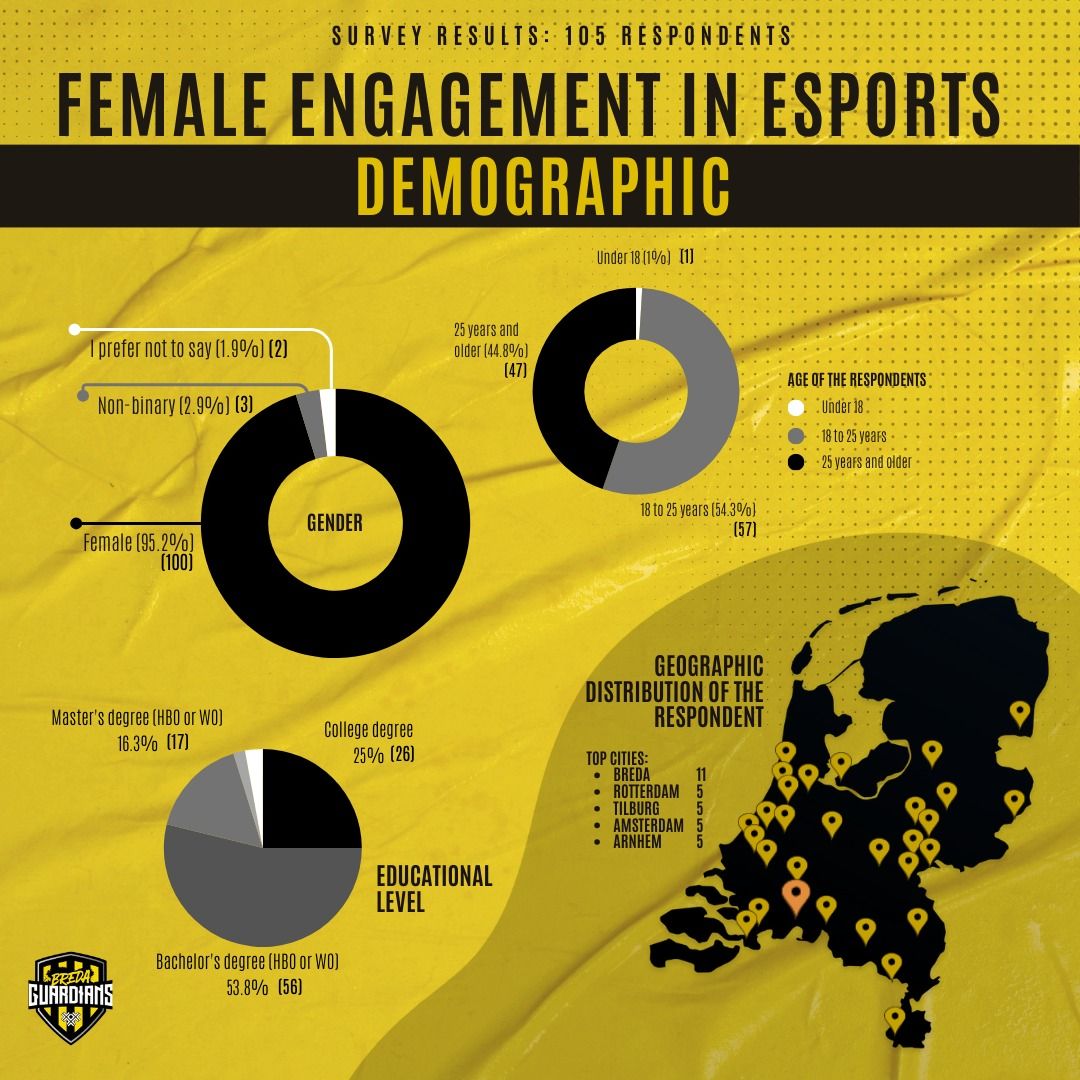
The study combined a review of industry trends and comparable initiatives with original field research: a survey of 105 respondents, 95 percent of whom identified as women, along with a focus group intended to provide a more detailed, first-hand perspective. Just over half were between 18 and 25 years of age, with most of the remainder older, and while Breda was the single most common location, respondents were drawn from across the Netherlands rather than the campus alone.
What the survey revealed
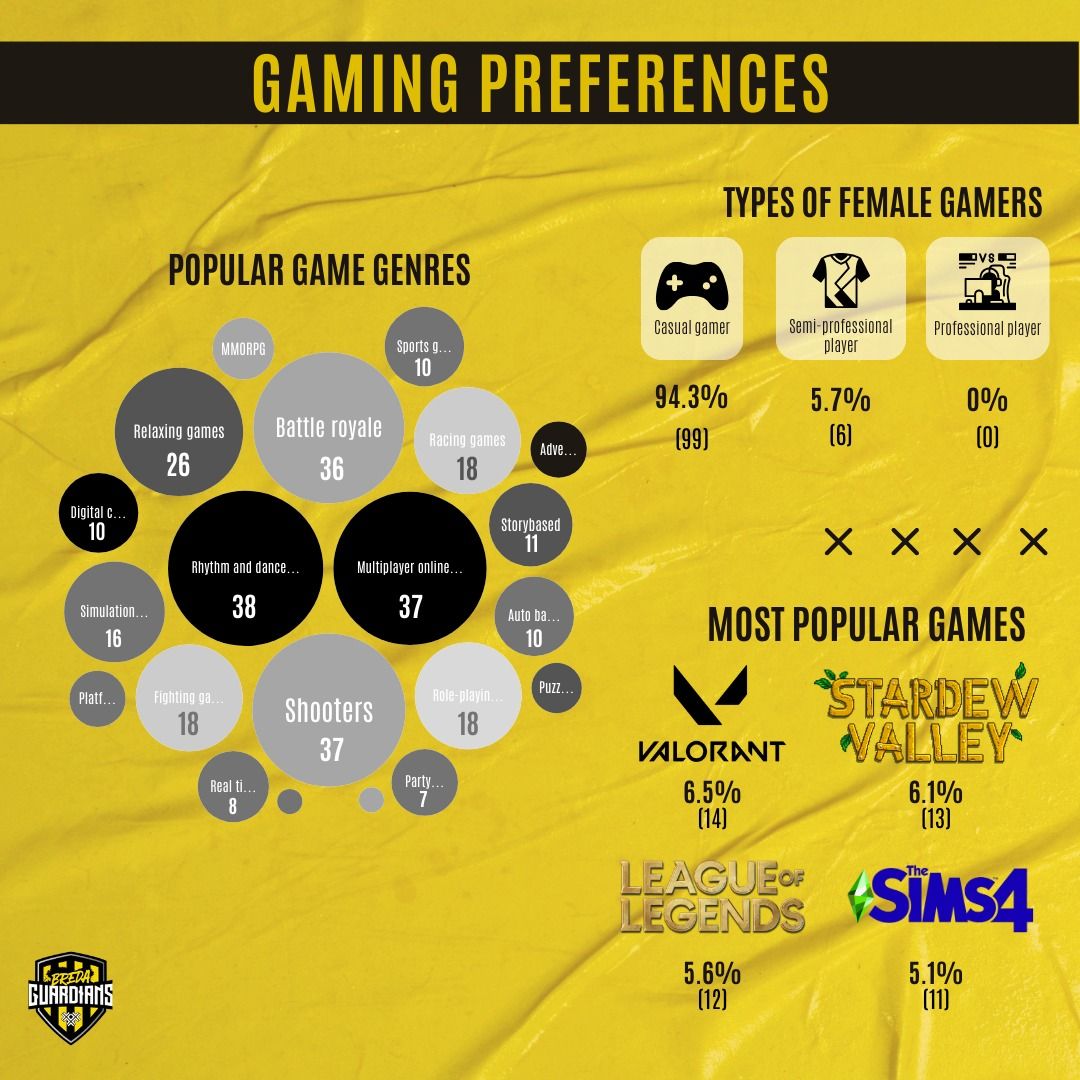
Several findings are worth highlighting. Respondents showed a preference for competitive, team-based genres. Rhythm and dance games, multiplayer online games, shooters, and battle royale were among the most popular, with titles such as Valorant, Stardew Valley, League of Legends, and The Sims 4 frequently named. However, this preference for competitive genres did not correspond to a desire to compete: 94 percent of respondents described themselves as casual players, and not a single respondent identified as a professional player.
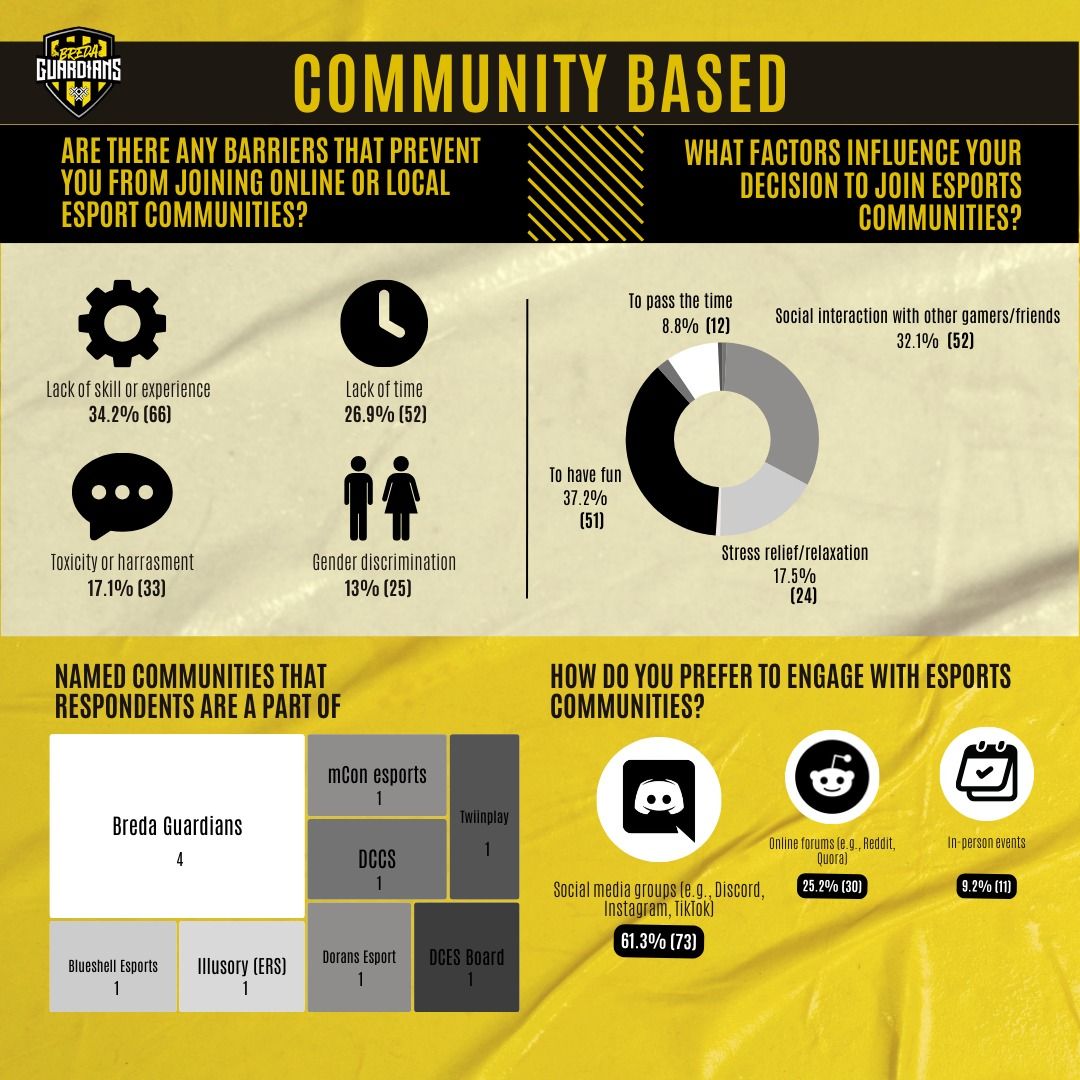
This distinction between preferred genre and preferred mode of play is reflected throughout the survey. When asked what prevents them from joining esports communities, respondents most frequently cited a perceived lack of skill (34 percent) and a lack of time (27 percent) rather than a lack of interest. Toxicity or harassment (17 percent) and gender discrimination (13 percent) were also cited, though less often. Among those who do participate in a community, the primary motivations were enjoyment (37 percent) and social interaction (32 percent), rather than competitive achievement.
The survey also indicated a clear preference regarding how respondents wish to engage. Social media platforms such as Discord were favoured by a substantial majority (61 percent), well ahead of online forums (25 percent) and in-person events (9 percent). This suggests that any initiative developed for The Hive should be promoted primarily through channels its target audience already uses, rather than relying solely on physical events.
Findings from the focus group
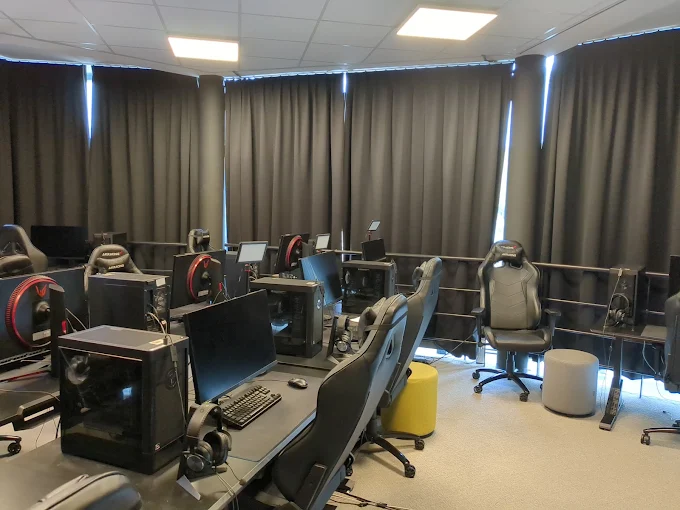
The focus group offered a more detailed account of participants' experience of the physical space. While participants generally regarded the appearance of The Hive favourably, several noted that it did not feel especially inviting in practice: the entrance area was described as having an office-like atmosphere, and the upstairs area was described as dim and more reminiscent of storage space than an open area intended for play. Participants proposed concrete and relatively low-cost improvements, including wall art, warmer lighting, and clearer signage indicating that visitors are welcome to enter.
A recurring theme across expert interviews with women working in the esports industry was that inclusion must constitute a genuine and sustained commitment rather than an occasional marketing exercise. Safe and respectful environments, together with authentic representation, were consistently identified as the factors most likely to produce meaningful change.
Recommendations
On the basis of these findings, the report recommends a set of measures that are low in cost but require sustained effort
Collaborating with student organisations, such as a Women in Games society, to organise informal, low-pressure gaming sessions
Producing a podcast in partnership with the campus Radio Hub to raise awareness of, and give voice to, women's experiences within esports
Making modest adjustments to the physical layout and signage of The Hive to make the space more approachable
Offering gameplay review sessions to help participants build confidence, rather than technical skill alone
None of these measures require substantial financial investment. What they require is sustained intent and consistent follow-through.
The Hive was always intended to be open to anyone in Breda who wishes to play. This research is intended to ensure that "anyone" genuinely includes everyone.